
Stretching Routine for Flexibility
Stretching Routine for Flexibility: Flexibility is a foundational element of physical health that supports smooth movement, joint stability, and overall comfort in daily life. While many people focus on strength training or cardiovascular exercise, stretching is equally important and often neglected. A consistent stretching routine for flexibility helps maintain muscle length, improves posture, reduces stiffness, and lowers the risk of injury. It also plays a key role in stress relief and long-term mobility, especially as the body ages.
This article provides a detailed, easy-to-understand guide to stretching routines for flexibility. It explains why flexibility matters, different types of stretching, a structured full-body routine, safety guidelines, lifestyle-specific adaptations, and how health insurance can support flexibility and mobility care.
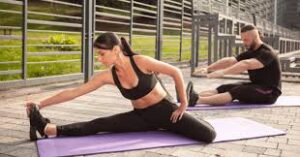
What Is Flexibility and Why It Matters
Flexibility refers to the ability of muscles, tendons, and joints to move freely through their full range of motion. When flexibility is limited, movements become restricted, uncomfortable, and sometimes painful.
The Role of Flexibility in Daily Movement
Flexible muscles allow the body to perform everyday actions such as bending, reaching, walking, and lifting without strain. Good flexibility supports proper alignment and reduces unnecessary stress on joints.
How Poor Flexibility Develops
Sedentary Habits
Long hours of sitting shorten muscles in the hips, legs, and back, leading to stiffness and discomfort.
Repetitive Movements
Repeating the same movements daily, whether at work or during exercise, can create muscle imbalances and tightness.
Aging and Reduced Activity
As people age, muscle elasticity naturally decreases, making stretching essential for maintaining mobility.
Key Benefits of a Stretching Routine for Flexibility
Stretching consistently provides benefits that extend beyond physical movement.
Improved Joint Mobility
Stretching maintains joint range of motion, making movements smoother and more controlled.
Reduced Muscle Tightness and Pain
Stretching relieves tension caused by stress, poor posture, or physical exertion.
Injury Prevention
Flexible muscles are less prone to strains, pulls, and overuse injuries.
Better Posture and Balance
Stretching tight muscles helps correct posture issues and improves balance and stability.
Enhanced Mental Relaxation
Stretching activates the parasympathetic nervous system, promoting calmness and reducing stress.
Types of Stretching Used for Flexibility
Understanding stretching methods helps build a balanced and safe routine.
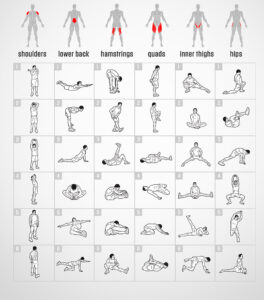
Static Stretching
Definition and Purpose
Static stretching involves holding a stretch in a fixed position for a period of time, typically 20 to 60 seconds.
Best Time to Perform
It is most effective after workouts or during cool-down sessions when muscles are warm.
Dynamic Stretching
Definition and Purpose
Dynamic stretching uses slow, controlled movements to gently move joints and muscles through their range of motion.
Best Time to Perform
Dynamic stretches are ideal before physical activity as part of a warm-up routine.
Active Stretching
Definition and Purpose
Active stretching uses muscle engagement to stretch opposing muscle groups without external assistance.
Benefits
It improves flexibility while also strengthening muscles and improving body control.
Passive Stretching
Definition and Purpose
Passive stretching relies on external forces such as gravity, straps, or assistance from another person.
Safety Considerations
It should be done carefully to avoid overstretching or joint strain.
Full-Body Stretching Routine for Flexibility
This routine targets all major muscle groups and can be performed at home without equipment. It is suitable for beginners and experienced individuals.
Neck and Shoulder Stretches
Neck Side Stretch
Slowly tilt your head toward one shoulder while keeping the opposite shoulder relaxed. This helps relieve neck tension caused by screen use and stress.
Neck Rotation
Gently rotate your head in a circular motion to improve neck mobility and reduce stiffness.
Shoulder Cross-Body Stretch
Bring one arm across your chest and gently pull it closer using the opposite hand to loosen tight shoulder muscles.
Chest and Upper Back Stretches
Chest Opener Stretch
Interlace your fingers behind your back and lift your arms slightly while opening your chest. This stretch counteracts rounded shoulders and improves posture.
Cat-Cow Stretch
Move between rounding and arching your back while on hands and knees. This increases spinal flexibility and improves circulation.
Seated Upper Back Stretch
Sit upright, clasp your hands forward, and gently round your upper back to release tension between the shoulder blades.
Spinal and Core Stretches
Seated Spinal Twist
Sit tall, twist your torso gently to one side, and hold. This improves spinal rotation and supports digestive health.
Standing Side Bend
Raise one arm overhead and bend sideways to stretch the sides of the torso and lower back.
Hip and Lower Body Stretches
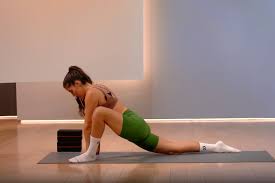
Hip Flexor Stretch
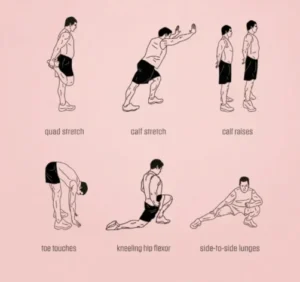
Step one foot forward into a lunge position and gently press the hips forward. This stretch is especially important for people who sit for long hours.
Hamstring Stretch
Extend one leg forward, keep the back straight, and hinge at the hips to stretch the back of the thigh.
Inner Thigh Stretch
Stand with feet wide apart and gently shift weight to one side to stretch the inner thigh muscles.
Quadriceps Stretch
Stand on one leg and pull the opposite foot toward your glutes while keeping knees aligned.
Calf and Ankle Stretch
Press the heel of the back foot into the floor while leaning forward against a wall to improve ankle mobility.
Full-Body Relaxation Stretch
Child’s Pose
Sit back on your heels with arms extended forward and forehead resting on the floor. This stretch relaxes the spine, hips, and shoulders while calming the mind.
How Often and How Long to Stretch
Consistency is essential for improving flexibility safely.
Recommended Stretch Duration
Hold each stretch for 20 to 60 seconds without bouncing.
Weekly Stretching Frequency
Stretching four to six times per week produces noticeable results, while daily stretching offers optimal benefits.
Stretching Safety Guidelines and Best Practices
Stretching should always feel controlled and comfortable.
Warm Up Before Stretching
Light movement such as walking or gentle mobility exercises prepares muscles for stretching.
Avoid Painful Stretching
Stretching should create mild tension, not sharp pain.
Focus on Breathing
Slow, deep breathing helps muscles relax and improves stretch effectiveness.
Progress Gradually
Increase stretch duration and intensity slowly to prevent injury.
Stretching Routines for Different Lifestyles
Flexibility routines can be adapted based on individual needs.
For Office and Desk Workers
Focus on the neck, shoulders, hips, and lower back to counteract prolonged sitting.
For Athletes and Active Individuals
Use dynamic stretches before workouts and static stretches afterward to enhance performance and recovery.
For Older Adults
Gentle, controlled stretching improves balance, joint mobility, and independence while reducing fall risk.
Role of Health Insurance in Flexibility and Mobility Support
Health insurance can be a valuable resource for maintaining and restoring flexibility.
Physical Therapy Coverage
Many insurance plans cover physical therapy for mobility issues, stiffness, and injury prevention.
Rehabilitation Programs
Insurance may support post-injury or post-surgery rehabilitation programs that emphasize flexibility and movement restoration.
Chronic Pain Management
Stretching is often part of treatment plans for back pain, arthritis, and musculoskeletal disorders covered by insurance.
Preventive Wellness Benefits
Some policies include wellness programs, fitness guidance, and musculoskeletal health resources.
Common Stretching Mistakes to Avoid
Avoiding these mistakes ensures safe and effective flexibility training.
Stretching Cold Muscles
Always warm up before stretching deeply.
Overstretching
Forcing a stretch can damage muscles and joints.
Holding Breath
Breath-holding increases tension and reduces stretch effectiveness.
Inconsistent Practice
Irregular stretching limits long-term flexibility gains.
Conclusion About Stretching Routine for Flexibility
A stretching routine for flexibility is one of the most accessible and effective ways to support lifelong physical health. Regular stretching keeps muscles long and elastic, joints mobile, and movement comfortable. Beyond physical benefits, stretching promotes relaxation, reduces stress, and enhances body awareness.
In a modern lifestyle dominated by sitting and repetitive movements, stretching helps restore balance and prevent chronic pain. When practiced consistently and safely, stretching becomes a powerful tool for injury prevention, posture improvement, and overall well-being. Combined with professional guidance and support through health insurance benefits such as physical therapy and wellness programs, a stretching routine can significantly improve quality of life at any age. Flexibility is not about extreme movements but about maintaining freedom of motion and comfort in everyday living.
Frequently Asked Questions (FAQs) About Stretching Routine for Flexibility
How long does it take to see improvements in flexibility?
Most people notice improved flexibility within two to four weeks of consistent stretching.
Is stretching safe for beginners?
Yes, beginners can safely stretch by starting gently and gradually increasing duration.
Should stretching be done every day?
Daily stretching provides the best results, but even four times a week is beneficial.
Can stretching reduce muscle soreness?
Yes, stretching helps relieve tension and supports muscle recovery.
Is stretching enough for overall fitness?
Stretching improves flexibility but should be combined with strength and cardiovascular exercise.
Does health insurance cover flexibility-related treatments?
Many insurance plans cover physical therapy and rehabilitation that include flexibility training.
Can stretching help with posture problems?
Yes, stretching tight muscles helps correct imbalances that contribute to poor posture.
Is stretching better in the morning or evening?
Both are effective; mornings reduce stiffness, while evenings promote relaxation.
Can older adults benefit from stretching?
Absolutely. Stretching improves mobility, balance, and independence in older adults.
Should stretching ever be painful?
No, stretching should feel gentle and controlled, never painful.