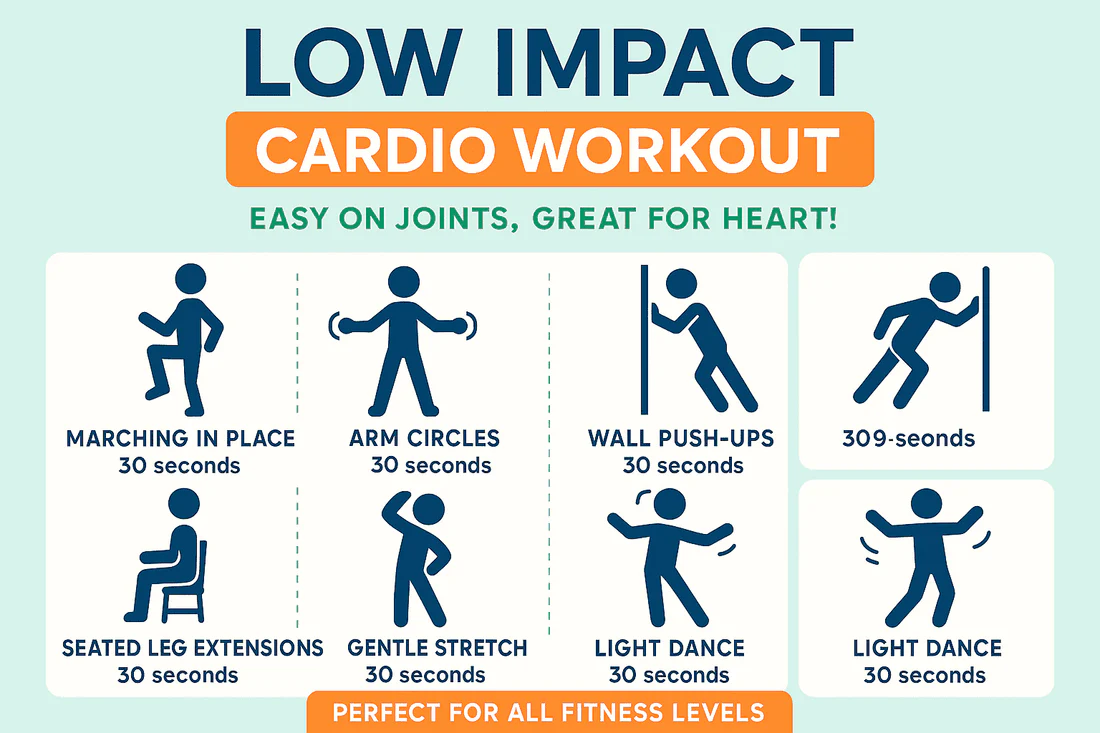
Low Impact Workouts
Low Impact Workouts: Have gained significant recognition in modern fitness due to their accessibility, safety, and long-term health benefits. Unlike high-intensity or high-impact exercise routines that place excessive stress on joints and connective tissues, low impact workouts are designed to minimize strain while still delivering measurable improvements in strength, mobility, cardiovascular health, and overall well-being. These workouts are suitable for beginners, older adults, individuals recovering from injury, and anyone seeking a balanced and sustainable fitness lifestyle.
This article provides a comprehensive, professional overview of low impact workouts, their benefits, types, implementation strategies, and their connection to preventive healthcare and health insurance benefits.

Understanding Low Impact Workouts
Definition of Low Impact Exercise
Low impact workouts are physical activities in which at least one foot remains in contact with the ground or movements are controlled to reduce force on joints. These exercises avoid repetitive jumping, pounding, or sudden directional changes, making them safer for the knees, hips, ankles, and spine.
How Low Impact Differs From Low Intensity
Low impact does not mean low effort. Many low impact workouts can be moderate to high intensity, elevating heart rate and building muscle endurance without excessive joint stress. The defining factor is reduced physical impact, not reduced effectiveness.
Benefits of Low Impact Workouts
Joint Protection and Injury Prevention
Low impact exercises significantly reduce the risk of overuse injuries, stress fractures, and joint inflammation. This makes them ideal for individuals with arthritis, osteoporosis, or a history of musculoskeletal injuries.
Improved Cardiovascular Health
Activities such as brisk walking, swimming, and cycling improve heart health, circulation, and lung capacity while maintaining joint safety.
Enhanced Muscle Strength and Flexibility
Strength-based low impact workouts build lean muscle mass, improve posture, and enhance functional strength required for daily activities.
Consistency and Long-Term Adherence
Because these workouts are less physically taxing, individuals are more likely to maintain a consistent exercise routine, which is critical for long-term health outcomes.
Mental Health and Stress Reduction
Low impact movement promotes the release of endorphins, reduces stress hormones, and supports mental clarity without causing excessive physical fatigue.
Popular Types of Low Impact Workouts
Walking and Power Walking
Walking is one of the most accessible low impact exercises. Power walking increases intensity while maintaining joint safety.
Key Benefits
- Improves cardiovascular endurance
- Supports weight management
- Enhances balance and coordination
Swimming and Water-Based Exercise
Water provides natural resistance while supporting body weight, making aquatic workouts exceptionally joint-friendly.
Key Benefits
- Full-body muscle engagement
- Reduced joint compression
- Ideal for rehabilitation and arthritis management
Cycling and Stationary Biking
Cycling offers an effective cardiovascular workout with minimal joint stress, especially when performed on a stationary bike.
Key Benefits
- Strengthens lower body muscles
- Improves heart health
- Allows controlled intensity progression
Yoga
Yoga combines controlled movement, breathing, and flexibility training, making it a cornerstone of low impact fitness.
Key Benefits
- Improves flexibility and posture
- Enhances balance and core stability
- Supports mental well-being
Pilates
Pilates focuses on controlled movements and core strength while maintaining spinal alignment and joint safety.
Key Benefits
- Builds deep core muscles
- Enhances body awareness
- Reduces back pain risk
Elliptical Training
Elliptical machines simulate running without impact, making them a preferred option for joint-conscious cardio.
Key Benefits
- Low stress on knees and hips
- Adjustable resistance levels
- Effective calorie burning
Low Impact Strength Training
Bodyweight Exercises
Exercises such as squats, wall push-ups, and glute bridges strengthen muscles without excessive joint strain.
Resistance Bands
Resistance bands provide controlled tension and are particularly effective for low impact strength training.
Light Free Weights
When used with proper form, light dumbbells can improve muscle tone and bone density safely.
Designing an Effective Low Impact Workout Routine
Warm-Up and Mobility
A proper warm-up increases blood flow, improves range of motion, and reduces injury risk.
Balanced Exercise Selection
A well-rounded routine should include:
- Cardiovascular movement
- Strength training
- Flexibility and mobility exercises
Progressive Overload
Gradually increasing resistance, duration, or complexity ensures continued improvement without overloading joints.
Rest and Recovery
Adequate recovery is essential for muscle repair, joint health, and long-term consistency.
Low Impact Workouts for Specific Populations
Older Adults
Low impact workouts support mobility, balance, and independence while minimizing fall and injury risks.
Individuals With Chronic Conditions
People managing arthritis, diabetes, or cardiovascular conditions often benefit from low impact exercise under professional guidance.
Beginners
Low impact workouts provide a safe entry point into regular physical activity without intimidation or excessive soreness.
Weight Management and Metabolic Health
Calorie Burning Without Joint Stress
Low impact workouts can support weight loss when performed consistently and combined with balanced nutrition.
Improved Insulin Sensitivity
Regular low impact exercise helps regulate blood sugar levels and supports metabolic health.
Role of Low Impact Workouts in Preventive Healthcare
Reducing Long-Term Medical Costs
Consistent physical activity lowers the risk of chronic diseases such as heart disease, obesity, and osteoporosis, potentially reducing healthcare expenses.
Supporting Preventive Screenings
Physically active individuals often engage more proactively in preventive health screenings and wellness programs.
Brief Guide to Health Insurance Benefits Related to Fitness
Wellness Program Coverage
Many health insurance providers offer wellness incentives, including discounts on gym memberships, fitness classes, or wearable fitness devices.
Preventive Care Benefits
Low impact workouts align with preventive care goals, which are often fully or partially covered under health insurance plans.
Rehabilitation and Physical Therapy Coverage
Insurance plans frequently cover physical therapy and rehabilitation programs that incorporate low impact exercises for injury recovery.
Reduced Premium Incentives
Some insurers provide premium reductions or rewards for maintaining an active lifestyle and meeting wellness benchmarks.
Common Mistakes to Avoid
Assuming Low Impact Means Ineffective
Low impact workouts can be highly effective when performed with proper intensity and consistency.
Ignoring Proper Form
Incorrect technique can still lead to injury, even in low impact routines.
Skipping Progression
Failing to gradually increase challenge can limit results and long-term benefits.
Conclusion: Why Low Impact Workouts Are a Smart Investment in Health
Low impact workouts represent a sustainable, inclusive, and evidence-based approach to physical fitness. They provide a safe pathway to improved cardiovascular health, muscular strength, flexibility, and mental well-being without placing unnecessary strain on the body. Unlike short-term, high-impact fitness trends that often lead to burnout or injury, low impact exercise supports lifelong movement and functional independence.
From a healthcare perspective, consistent engagement in low impact workouts aligns closely with preventive medicine goals. By reducing the risk of chronic disease, improving mobility, and supporting mental health, these workouts can contribute to lower long-term medical costs and improved quality of life. When paired with health insurance wellness benefits, low impact fitness becomes not only a physical investment but also a financial and preventive healthcare strategy.
Ultimately, low impact workouts are not a compromise they are a strategic choice for individuals who value long-term health, consistency, and resilience. Whether you are beginning your fitness journey or seeking a safer alternative to high-impact training, low impact workouts offer a practical and effective solution.

Frequently Asked Questions (FAQs)
Are low impact workouts effective for weight loss?
Yes. When performed consistently and combined with proper nutrition, low impact workouts can support sustainable weight loss by increasing calorie expenditure and improving metabolic health.
How often should I do low impact workouts?
Most individuals benefit from 3 to 5 sessions per week, depending on fitness level and overall health goals.
Can low impact workouts build muscle?
Yes. Strength-focused low impact exercises using resistance bands, bodyweight, or light weights can build muscle tone and endurance.
Are low impact workouts suitable for people with joint pain?
Low impact workouts are often recommended for individuals with joint pain, arthritis, or previous injuries, but medical consultation is advised.
Do I need special equipment for low impact workouts?
Many low impact workouts require minimal equipment, making them accessible at home or outdoors.
Can low impact workouts improve heart health?
Absolutely. Activities such as walking, swimming, and cycling significantly improve cardiovascular fitness.
Are low impact workouts covered by health insurance?
While workouts themselves are not typically covered, many insurance plans offer wellness programs, gym discounts, or physical therapy coverage that includes low impact exercise.
Can beginners start with low impact workouts?
Yes. Low impact workouts are ideal for beginners due to their safety, adaptability, and reduced risk of injury.
How long should a low impact workout session last?
Sessions typically range from 30 to 60 minutes, depending on intensity and fitness goals.
Are low impact workouts suitable for long-term fitness?
Yes. Their sustainability and joint-friendly nature make them ideal for lifelong fitness and overall health maintenance.