
Portfolio Diversification
A Practical Guide to Building a Resilient Investment Strategy
Portfolio Diversification: One of those financial ideas that initially seems complicated but, when you break it down, becomes surprisingly logical is portfolio diversification. Think of it like not putting all your eggs in one basket. You still have other baskets if one falls. In investing, diversification works the same way. It spreads risk, stabilizes returns, and helps you sleep better at night knowing your financial future is not dependent on a single investment.
In today’s unpredictable financial environment, portfolio diversification is no longer optional. It is a foundational strategy for anyone serious about building long-term wealth while managing risk responsibly.
Understanding Portfolio Diversification
What Portfolio Diversification Really Means
At its core, portfolio diversification means investing across different assets, industries, regions, and strategies to reduce overall risk. Instead of relying on one stock, one sector, or one market, you distribute your investments so that poor performance in one area can be offset by stronger performance in another.
Diversification does not aim to eliminate risk entirely. That would be unrealistic. Instead, it seeks to control and manage risk in a structured, thoughtful way.
Why Diversification Matters in Modern Investing
Numerous factors, including interest rates, political developments, economic cycles, technological advancements, and even worldwide health crises, have an impact on markets. Diversification acts as a buffer against these uncertainties. When one market struggles, another may thrive, helping to balance overall portfolio performance.
The Core Principles Behind Diversification
Risk and Return Explained Simply
Every investment carries some level of risk. Generally, higher potential returns come with higher risk. Diversification allows you to combine assets with varying risk levels so that your portfolio does not swing too aggressively in either direction.
Correlation and Its Role in Portfolio Balance
Correlation measures how investments move in relation to one another.
Positive vs Negative Correlation
Assets with positive correlation tend to move in the same direction. Negative correlation means when one goes up, the other tends to go down. A well-diversified portfolio includes assets with low or negative correlation to reduce volatility.
Types of Portfolio Diversification
Asset Class Diversification
Stocks, Bonds, and Cash
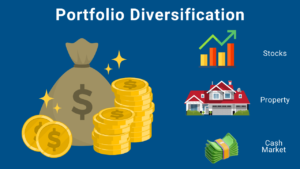
Stocks offer growth potential, bonds provide stability, and cash ensures liquidity. Combining these three forms the backbone of most diversified portfolios.
Real Estate and Alternative Assets
Real estate, commodities, private equity, and hedge funds add another layer of diversification. These assets often behave differently from traditional markets, offering additional protection during downturns.
Geographic Diversification
Investing across different countries and regions reduces exposure to localized economic risks. Global diversification allows investors to benefit from growth in emerging markets while balancing risk in developed economies.
Sector and Industry Diversification
Spreading investments across technology, healthcare, finance, energy, and consumer goods prevents overexposure to a single industry’s downturn.
Diversification Across Investment Styles
Growth vs Value Investing
Growth stocks focus on future potential, while value stocks emphasize current fundamentals. Holding both helps balance aggressive growth with stable returns.
Active vs Passive Strategies
Active investing seeks to outperform the market, while passive investing aims to match it. A mix of both provides flexibility and cost efficiency.
Portfolio Diversification by Time Horizon
Short-Term Investment Portfolios
Short-term portfolios prioritize liquidity and capital preservation. Diversification here focuses on low-risk instruments such as bonds and money market funds.
Long-Term Wealth-Building Portfolios
Long-term portfolios can tolerate more volatility. Diversification emphasizes growth assets like equities, real estate, and alternative investments.
The Role of Health Insurance Benefits in Financial Diversification
Health Insurance as a Risk Management Tool
While not an investment, health insurance plays a critical role in financial planning. Medical emergencies can derail even the strongest investment portfolios if not properly covered.
How Health Insurance Protects Investment Portfolios
Health insurance benefits reduce out-of-pocket medical expenses, protecting your savings and investments from unexpected healthcare costs. By transferring health-related financial risk to an insurer, you preserve capital that can remain invested and continue compounding over time.
Common Mistakes in Portfolio Diversification
Over-Diversification
Too many investments can dilute returns and make portfolio management unnecessarily complex.
False Diversification
Owning multiple assets that behave similarly does not reduce risk. True diversification requires variety across asset classes and correlations.
Ignoring Rebalancing
Without regular rebalancing, portfolios drift away from their intended risk profile.
How to Build a Diversified Portfolio Step by Step
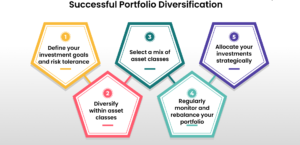
Assessing Risk Tolerance
Understanding how much volatility you can emotionally and financially handle is essential.
Setting Financial Goals
Clear goals determine asset allocation. Retirement, education, and wealth accumulation require different strategies.
Choosing the Right Mix of Assets
Balance growth, income, and stability based on your objectives and time horizon.
Rebalancing and Monitoring Your Portfolio
Why Rebalancing Matters
Rebalancing restores your portfolio to its original allocation, ensuring risk remains aligned with your goals.
How Often Should You Rebalance
Most investors rebalance annually or semi-annually, though market conditions may require adjustments.
Portfolio Diversification in Uncertain Markets
Managing Volatility
Diversification reduces sharp swings, helping investors stay invested during turbulent periods.
Diversification During Economic Downturns
Defensive assets such as bonds, healthcare stocks, and cash reserves become especially valuable during recessions.
The Psychological Benefits of Diversification
Reducing Emotional Investing
A diversified portfolio minimizes panic-driven decisions during market downturns.
Staying Consistent With Long-Term Plans
Confidence in diversification encourages disciplined investing and long-term focus.
Long-Term Impact of Portfolio Diversification
Wealth Preservation
Diversification protects capital by limiting exposure to catastrophic losses.
Sustainable Financial Growth
Over time, diversified portfolios deliver more stable and predictable returns.
Conclusion About Portfolio Diversification
Portfolio diversification is not about chasing the highest returns or timing the market perfectly. It is about building a resilient financial structure that can withstand uncertainty, adapt to change, and grow steadily over time. By spreading investments across asset classes, regions, sectors, and strategies, investors reduce risk without sacrificing opportunity.
Incorporating non-investment safeguards like health insurance benefits further strengthens financial security by protecting wealth from unforeseen medical expenses. Diversification becomes more than just an investment strategy when it is viewed holistically; it becomes an all-encompassing financial philosophy.
A well-diversified portfolio promotes discipline, reduces emotional decision-making, and supports long-term financial success. Whether you are a beginner or an experienced investor, diversification remains one of the most powerful tools available for sustainable wealth creation.
Frequently Asked Questions (FAQs)
What is the ideal number of investments in a diversified portfolio?
There is no universal number. The ideal portfolio balances sufficient diversification without unnecessary complexity, typically across multiple asset classes and sectors.
Can diversification guarantee profits?
No. Diversification reduces risk but does not eliminate it. Market losses are still possible.
Is diversification suitable for small investors?
Yes. Even small portfolios can be diversified using mutual funds and exchange-traded funds.
How does health insurance fit into financial planning?
Health insurance protects investments by preventing medical expenses from eroding savings and long-term assets.
Should diversification strategies change over time?
Yes. As financial goals, age, and market conditions evolve, diversification strategies should be reviewed and adjusted accordingly.