
How Fast Can You Raise Credit Score
Timelines, Real Data, and Government-Backed Guidance
How Fast Can You Raise Credit Score: Raising a credit score is not guesswork. It is a measurable process driven by specific actions and documented by financial institutions and government agencies. While many people search for instant solutions, the real answer lies in understanding which credit factors update quickly and which require time. Government-backed resources such as the Consumer Financial Protection Bureau (CFPB), Federal Trade Commission (FTC), and U.S. Department of Housing and Urban Development (HUD) provide clear guidance on how credit scores respond to behavior.
Understanding how fast you can raise credit score is key to managing your financial health.
This article expands on realistic improvement timelines, supported by official references, and explains exactly how fast credit scores can rise under different circumstances.
Many people wonder just how fast they can raise credit score, and this article will provide insight into that.

How Credit Scores Update and Why Speed Varies
Credit scores are recalculated every time new data is reported to credit bureaus. Most lenders report information monthly, which means changes can appear as soon as the next reporting cycle.
Credit score changes are data-driven and cycle-based.
According to the Consumer Financial Protection Bureau (consumerfinance.gov), credit scores update when creditors send new account information, typically every 30 days. This explains why some improvements appear quickly, while others lag.
Speed depends on:
- Type of negative or positive data
- Frequency of reporting
- Severity of past credit issues
- Overall credit file thickness
Some factors reset monthly, while others are fixed for years under federal law.
How Fast Credit Score Can Increase by Lowering Credit Utilization
Credit utilization is consistently cited by government and financial regulators as a major scoring factor.
Lowering credit card balances can improve scores within 30 days.
The CFPB confirms that credit card balances are reported monthly and directly influence scores. When balances decrease, utilization ratios improve immediately after reporting.
Being aware of how fast you can raise credit score can help you make informed financial decisions.
Example scenario:
- Utilization above 80% → score suppressed
- Utilization reduced below 30% → score recalculates upward
This is one of the fastest legitimate ways to raise a credit score.
Government reference:
Consumer Financial Protection Bureau – Credit Reports and Scores
How Fast Credit Score Improves After On-Time Payments
Knowing how fast you can raise credit score through on-time payments is crucial for financial recovery.
Payment history is the most heavily weighted factor in credit scoring models.
On-time payments begin helping immediately, but recovery takes time.
According to the Federal Trade Commission (reportfraud.ftc.gov), late payments remain on credit reports for up to seven years. However, their impact decreases as newer positive payments are added.
Timeline expectations:
- 1–2 months: score stabilizes
- 3–6 months: gradual improvement
- 12+ months: significant recovery if no further delinquencies occur
Recent behavior matters more than old mistakes, a principle confirmed by both FICO and federal consumer guidance.
Government reference:
Federal Trade Commission – Credit Scores
How Quickly Credit Score Can Improve After Paying Down Debt
Debt reduction impacts credit scores differently depending on debt type.
Assessing how fast you can raise credit score by paying down debt varies by the type of debt.
Revolving debt improves scores faster than installment debt.
The CFPB explains that credit cards affect utilization, while installment loans focus more on payment consistency.
Typical improvement timeline:
- Credit cards: 30–60 days after balance reduction
- Personal/auto loans: gradual improvement over several months
- Mortgage loans: long-term stability impact
Paying off debt does not instantly erase negative history, but it does improve current risk indicators.
Government reference:
CFPB – Managing Debt
How Fast Credit Score Improves After Disputing Errors
Realizing how fast you can raise credit score by disputing errors can empower consumers.
Federal law protects consumers from inaccurate credit reporting.
Correcting errors can raise scores within 30–45 days.
Under the Fair Credit Reporting Act (FCRA), credit bureaus must investigate disputes within 30 days.
If inaccurate late payments, balances, or accounts are removed, scores update immediately after correction.
Common errors include:
- Accounts not belonging to the consumer
- Incorrect payment statuses
- Duplicate accounts
- Outdated negative information
Government reference:
Federal Trade Commission – Disputing Credit Report Errors
How Long It Takes to Improve Credit from Poor to Fair
The journey of how fast you can raise credit score from poor to fair is often gradual.
For consumers with poor credit, improvement happens in stages.
Initial improvement usually appears within 3 to 6 months.
HUD notes that lenders look for recent positive behavior when evaluating creditworthiness, especially for housing programs.
This stage focuses on:
- Eliminating late payments
- Reducing high balances
- Avoiding new credit inquiries
Reaching fair credit typically takes 6 to 12 months of consistent behavior.
Government reference:
U.S. Department of Housing and Urban Development – Credit Requirements
How Long It Takes to Move from Fair to Good Credit
At this stage, the credit profile is no longer damaged but still developing.
Understanding the timeline of how fast you can raise credit score from fair to good is essential for consumers.
Moving from fair to good credit often takes 12 to 24 months.
This aligns with guidance from HUD and CFPB, which emphasize stability, aging accounts, and low utilization.
Negative items weigh less over time, while positive data compounds gradually.
Actions That Speed Up Credit Score Improvement
Certain strategies are supported by consumer protection agencies as effective accelerators.
Paying balances before statement closing dates lowers reported utilization.
Setting up automatic payments prevents accidental delinquencies.
Requesting credit limit increases reduces utilization without new debt.
Becoming an authorized user on a long-standing account can help thin files.
These methods are widely referenced in CFPB educational materials.
Actions That Slow Credit Score Growth
Government agencies consistently warn against behaviors that delay progress.
Identifying how fast you can raise credit score involves avoiding certain common mistakes.
Frequent credit applications create unnecessary inquiries.
Closing old accounts reduces average account age.
Carrying high balances limits utilization improvements.
Avoiding these mistakes keeps improvement timelines realistic.
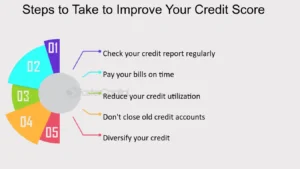
Realistic Credit Score Increase Per Month
Credit scores do not rise evenly.
A realistic increase is 10 to 40 points within 1 to 3 months.
Larger increases usually involve correcting major errors or reducing extreme utilization.
The CFPB advises focusing on trends rather than monthly fluctuations.
How Long It Takes to Reach Excellent Credit
Excellent credit reflects long-term financial discipline.
Curious about how fast you can raise credit score to achieve excellent credit? The path can be long but rewarding.
Reaching excellent credit often takes several years.
Federal lending programs prioritize long histories, low debt, and consistent payments.
Once achieved, excellent credit is easier to maintain because it is built on stable patterns.
The Role of Federal Law in Credit Score Timelines
Federal regulations shape how long negative information remains.
Under the Fair Credit Reporting Act:
- Late payments stay for 7 years
- Bankruptcies stay up to 10 years
- Hard inquiries stay for 2 years
While these items remain visible, their scoring impact decreases over time with positive behavior.
Conclusion About How Fast Can You Raise Credit Score
The main question remains: how fast can you raise credit score to meet your goals?
Credit scores can improve faster than many people expect, especially when high utilization or reporting errors are the main issues. Government-backed guidance confirms that meaningful improvements can occur within 30 to 90 days, while deeper recovery takes months or years depending on credit history. The fastest path is not shortcuts, but consistency: on-time payments, low balances, accurate reports, and minimal new credit activity. When guided by verified principles and supported by federal protections, credit score improvement becomes predictable, measurable, and sustainable.

FAQS About How Fast Can You Raise Credit Score
Many FAQs address how fast you can raise credit score, illustrating common concerns among consumers.
How fast can a credit score increase in 30 days?
A credit score can increase within 30 days if major issues such as high credit utilization or reporting errors are corrected. According to guidance from the Consumer Financial Protection Bureau, paying down credit card balances before the statement closing date can lead to noticeable improvements in the next reporting cycle. Typical increases range from 10 to 40 points, depending on the starting score and overall credit profile.
Can paying off collections raise a credit score quickly?
Paying off collections may or may not result in an immediate score increase. The Federal Trade Commission explains that while paid collections still remain on credit reports for up to seven years, newer scoring models place less weight on paid collections than unpaid ones. The long-term benefit is improved lender perception and reduced risk of further negative reporting.
How long does it take to recover from a missed payment?
Recovery time depends on how recent and how frequent the missed payment was. A single late payment may begin to lose impact after three to six months of consistent on-time payments. Federal consumer guidance confirms that recent positive behavior carries more weight than older negative activity, making consistency the most important factor.
Does checking a credit score slow down improvement?
No. Checking a personal credit score is considered a soft inquiry and does not affect the score. The Consumer Financial Protection Bureau encourages regular credit monitoring to catch errors early and track improvement trends without risk.
Can credit scores increase without opening new accounts?
Yes. Credit scores can improve significantly without opening new accounts by lowering credit utilization, paying on time, correcting errors, and allowing accounts to age. Government agencies emphasize responsible management of existing credit as the safest and most effective improvement strategy.
Is there a limit to how fast a credit score can rise?
There is no fixed limit, but improvement speed is constrained by federal reporting rules and credit scoring models. Rapid increases usually occur when major negative factors are resolved, while long-term improvements depend on consistent behavior over time.
Ultimately, understanding how fast you can raise credit score depends on individual circumstances.
Do authorized user accounts help raise credit scores quickly?
Authorized user accounts can help, especially for individuals with thin credit files, when the primary account has a long history and low utilization. The CFPB notes that authorized user status can contribute positive payment history, but it should be used carefully and strategically.
How often should credit reports be reviewed during improvement?
Reviewing credit reports every three to four months is recommended during active improvement. The FTC advises regular monitoring to ensure accuracy and to confirm that positive changes are being reported correctly.
Can excellent credit be achieved after past financial hardship?
Yes. Federal consumer protections ensure that negative information loses impact over time. With consistent positive behavior, low debt levels, and account longevity, many consumers rebuild their way to excellent credit within several years.
What is the most important habit for faster credit score improvement?
Consistent on-time payments remain the most critical habit. Government-backed guidance confirms that payment history carries the greatest weight in credit scoring, making reliability the foundation of all long-term credit improvement.
In conclusion, knowing how fast you can raise credit score empowers consumers to take control of their finances.